Introduction to XR course
Introduction
Virtual reality, extended reality, augmented reality, mixed reality…
These words are becoming increasingly common in the media, in talks with clients, and in conversations with colleagues. While some are quite informed about this technical arena, others are just getting started and want to know the fundamentals. If that describes you, here’s a quick rundown of the main phrases.
eXtended Reality (XR)
eXtended Reality (XR) is a catch-all word for any technologies that augment or replace your perspective of the world. All XR technologies increase our perception of reality by combining the virtual and’real’ worlds or by producing a completely immersive experience.
XR is a catch-all word for Augmented Reality (AR), Virtual Reality (VR), Mixed Reality (MR), and any future immersive technologies.
Virtual Reality (VR)
VR refers to a three-dimensional, computer-generated world that a person may explore and interact with. This individual is totally immersed in this virtual environment thanks to a VR headset or head-mounted display that provides a 360-degree picture of an artificial world. When combined with headphones, effective VR may fool your brain into believing you are entirely detached from your real surroundings.
Many individuals are familiar with virtual reality through the usage of head-mounted devices such as the Oculus Quest, HTC Vive, or Google Cardboard.
Pros and cons of VR
| Pros | Cons |
|---|---|
| Better than reality | High cost |
| Used in various fields | Communication should not be replaced for group of people |
| User have awesome experiences | Feeling of worthlessness |
| Gives detail views | Users addict to the virtual world |
| Connects with people remotly | Technology is still experimental |
| Effective communication | Training in VR environment is not real |
VR may also cause
motion sicknessif the DEV did not properly configure the game/application.
Look through this article to learn more about the benefits and drawbacks of virtual reality.
Augmented Reality (AR)
Unlike VR, AR does not provide complete immersion. Instead, AR augments your vision of the actual world by superimposing computer-generated information such as images, text, and motion on top of what you see.
This technique is now often utilized in smartphone augmented reality applications that require the user to hold their phone in front of them. The software may show contextual information that appears to be in the actual environment by capturing a picture from the camera and analyzing it in real time.
Pokémon Go and Snapchat filters that place digital things such as hats or spectacles on your head are examples of AR experiences and games.
Pros and cons of AR
| Pros | Cons |
|---|---|
| Enhanced Experience | High cost |
| Ease of Use | Assaults Confidentiality |
| Social Interaction | Accidental Situations |
| Learning and Practice | Addiction |
| Improved Technology | Psychological Effects |
Look at this page to learn more about the AR’s benefits and drawbacks.
Mixed Reality (MR)
MR (also known as mixed reality) is the most recent immersive technology. MR is a hybrid of AR and VR that combines the actual and virtual worlds through holograms, immersive projections, and other means.
In MR, digital material is superimposed in real time with the user’s environment. Unlike with AR, however, virtual objects in MR act in every way as if they were present in the real world. They are, for example, concealed by physical items, their illumination is compatible with genuine light sources in the environment, and you may interact with digital things in any way you choose, such as spinning them around.
While not as immersive as VR, MR must be watched through semi-transparent glasses or MR headsets fitted with a camera to record and show the user’s environment.
Despite their high cost, MR devices are already having a real-world impact, with Case Western Reserve University in Ohio using the Hololens to teach anatomy to medical students.
What use cases does XR have?
ONBOARDING AND TRAINING Employee training and onboarding is a costly, time-consuming, and critical activity for any business. Immersive XR training experiences have the potential to alter the onboarding process for many businesses by providing workers with the unique ability to practice new skills in a secure, regulated, yet realistic environment. Experts may also communicate with trainees in many places at the same time, offering businesses an advantage in the competitive world of global talent development.
SALES AND CUSTOMER SERVICE As customers seek more tailored and complete customer experiences, XR has emerged as an unrivaled means of showcasing items. Shoppers may visit virtual storefronts, interact with digital representations of things whose actual counterparts are half a globe away, and even “try on” garments, which is a significant advance over scrolling through static photos on a webpage. Not only will this raise customer happiness, but it will also increase sales and decrease the amount of returns.
ONLINE COLLABORATION XR may be used to enable remote collaboration, letting teams to collaborate virtually as if they were in the same physical area. This is especially beneficial for businesses with remote teams or those working in industries where face-to-face interactions are not possible. Traveling as little as possible saves time and money while also significantly lowering an organization’s carbon impact.
In addition, XR promises to go much beyond the conventional video conference call in replicating the experience of face-to-face connection, encouraging more engaging, energetic, and intriguing meetings. In the sphere of education, the Rady School of Management at the University of California, San Diego has constructed a virtual campus complete with real-time lectures, breakout rooms, and outdoor areas.DEVELOPMENT AND DESIGN XR is already transforming the design and development of both goods and processes. Product ideas may be iterated using detailed and interactive 3D representations instead of pricey physical prototypes and a collocated product team. Digital prototypes are also significantly more convenient to reuse, combine, and store.
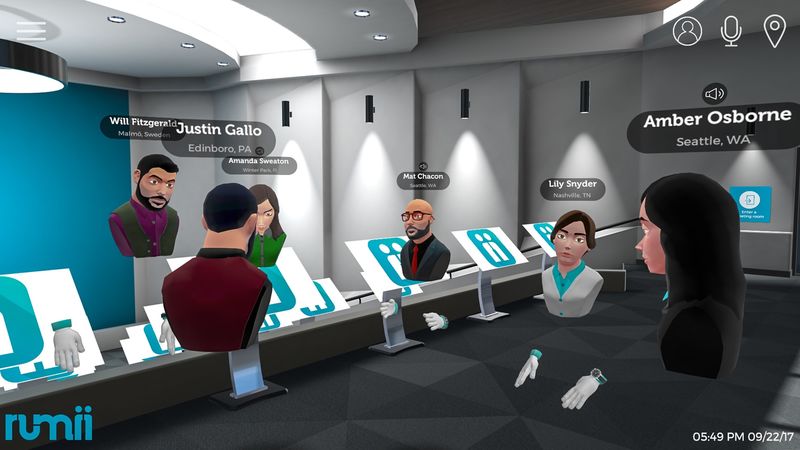 XR meeting conference